
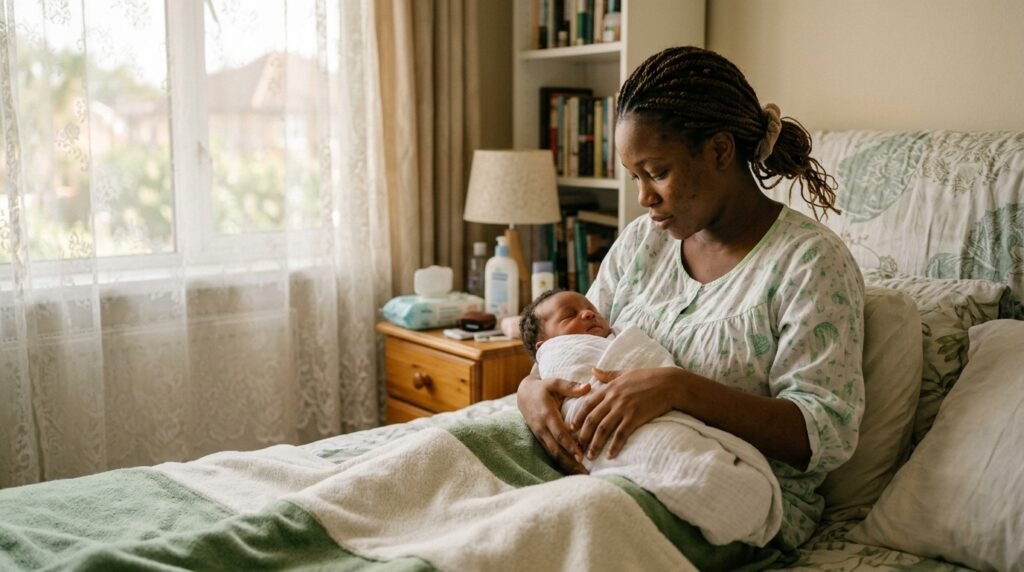
Every year on the 10th of September, the world marks World Suicide Prevention Day, a day set aside to talk more openly about mental health struggles and remind people that help exists and works. It felt like the right moment for us to talk about something that affects new mothers far more than most people realise: the emotional weight that can come after childbirth, and how to tell the difference between what’s normal and what needs medical attention.
If you’ve recently had a baby and found yourself crying over nothing, snapping at your husband for no clear reason, or lying awake at night even when the baby is finally asleep, you are not alone, and you are not a bad mother. Almost every new mother goes through some version of this. But for a smaller number of women, these feelings don’t fade. They deepen. And knowing which one you’re dealing with can make all the difference.
What Are the “Baby Blues”?
The baby blues are the emotional dip that shows up in the first few days after delivery, usually around day two or three, according to the American College of Obstetricians and Gynecologists (ACOG). It’s incredibly common. Some studies suggest it affects up to 80 percent of new mothers, which basically means it’s the norm rather than the exception.
You might notice:
- Sudden tearfulness, even crying “for no reason”
- Feeling overwhelmed, irritable, or anxious
- Mood swings, good moments followed by low ones
- Trouble sleeping or eating well
- Doubting your ability to care for your baby
Here’s the reassuring part. The baby blues usually peak around day four or five and clear up on their own within one to two weeks, without any treatment. Rest, support from family, and reassurance are usually all that’s needed. Importantly, the baby blues don’t stop you from functioning. You’re tired and emotional, but you’re still able to care for your baby and get through your day.
What Is Postpartum Depression?
Postpartum depression (PPD) is different, not just in how it feels, but in how long it lasts and how much it takes from you. Where the baby blues fade on their own, PPD tends to get heavier over time if it isn’t addressed. According to ACOG, PPD can start anytime in the first year after birth, though it most commonly begins one to three weeks after delivery, and left untreated, it can last for months.
This isn’t a small or rare issue, especially here at home. Studies from Nigerian teaching hospitals and clinics put the prevalence of postpartum depression anywhere between 14 and over 30 percent depending on the region, and a study conducted right here in Ibadan found that roughly 1 in 5 postpartum women showed symptoms of depression. Of those women, more than half never sought any form of care for it.
Signs that what you’re experiencing may be PPD rather than the baby blues include:
- Sadness, emptiness, or hopelessness that doesn’t lift
- Losing interest in things you normally enjoy, including your baby
- Difficulty bonding with your baby, or feeling disconnected from them
- Severe mood swings, excessive crying that feels bottomless
- Withdrawing from your partner, family, or friends
- Changes in appetite, eating far more or far less than usual
- Overwhelming fatigue that isn’t solved by sleep
- Intense irritability or anger
- Feelings of worthlessness, shame, or guilt, especially about being “a bad mother”
- Difficulty thinking clearly, concentrating, or making decisions
The biggest difference between the two is impact. Baby blues make you weepy and tired, but you can still function. PPD interferes with your ability to get through daily life, care for yourself, and connect with your baby.
Why Does This Happen?
There’s no single cause. It’s usually a mix of things working together: the sharp hormonal drop after delivery, physical exhaustion from birth and broken sleep, and the emotional weight of a completely new role, layered onto whatever else is going on in your life.
Some women carry a higher risk than others, including those with:
- A personal or family history of depression or anxiety
- A previous episode of postpartum depression
- Limited support from a partner or family
- A stressful pregnancy, difficult delivery, or a baby with health complications
- Relationship strain or domestic conflict at home
- Financial stress
If any of this sounds like you, it doesn’t mean you’re guaranteed to develop PPD, but it does mean it’s worth paying closer attention to how you’re feeling in the weeks after birth.
When It Becomes an Emergency
There’s one more layer to this conversation that we can’t skip, especially around World Suicide Prevention Day. In its most severe form, untreated postpartum depression can bring thoughts of harming yourself, or in rare cases, a much more serious condition called postpartum psychosis, which can involve confusion, hallucinations, or delusional thinking. Postpartum psychosis is rare, but it is a medical emergency that requires immediate care.
If you are having thoughts of hurting yourself or your baby, please do not sit with this alone and please do not wait to see if it passes. Reach out to someone right away, a family member, your doctor, or a crisis line. In Nigeria, the SURPIN Helpline and the Mentally Aware Nigeria Initiative (MANI) offer free, confidential support around the clock. These conversations can genuinely save lives, and reaching out is a sign of strength, not weakness.
What Helps
The good news, and it is genuinely good news, is that postpartum depression is treatable. Most women who get support go on to feel like themselves again. Depending on what you’re going through, treatment may include:
- Talk therapy, which helps many women process what they’re feeling and rebuild a sense of control
- Medication, including antidepressants that are considered safe to use while breastfeeding, prescribed and monitored by your doctor
- Support groups, connecting with other mothers going through the same thing
- Practical support at home, sharing night duties, meals, and baby care with your partner or family so you actually get to rest
What matters most is not trying to push through it alone or waiting for it to “just go away.” The earlier it’s addressed, the shorter and easier the road to feeling better usually is.
In Conclusion
Motherhood is beautiful, but it is also genuinely hard, and no one should have to pretend otherwise. The baby blues are a normal, temporary part of adjusting to a new baby. Postpartum depression is a medical condition, not a personal failure, and it deserves the same seriousness we’d give any other health concern.
If you’ve had a baby recently and something doesn’t feel right, whether it’s mild worry or something heavier, please talk to someone. At J-Rapha Hospital and Maternity, Ibadan, our team is here to support you through every part of motherhood, including the emotional side that doesn’t always get talked about enough. You don’t have to carry this quietly, and you don’t have to figure it out alone.
Book an appointment with J-Rapha Hospital and Maternity
If you or someone you know is in crisis, please reach out immediately to the SURPIN Helpline or the Mentally Aware Nigeria Initiative (MANI), both available free and confidentially around the clock.